AsphaltMine: The asphalt test result database for performance prediction
DOI:
https://doi.org/10.21809/rilemtechlett.2026.240Keywords:
Database, Web application, Asphalt performance tests, Prediction platform, Machine LearningAbstract
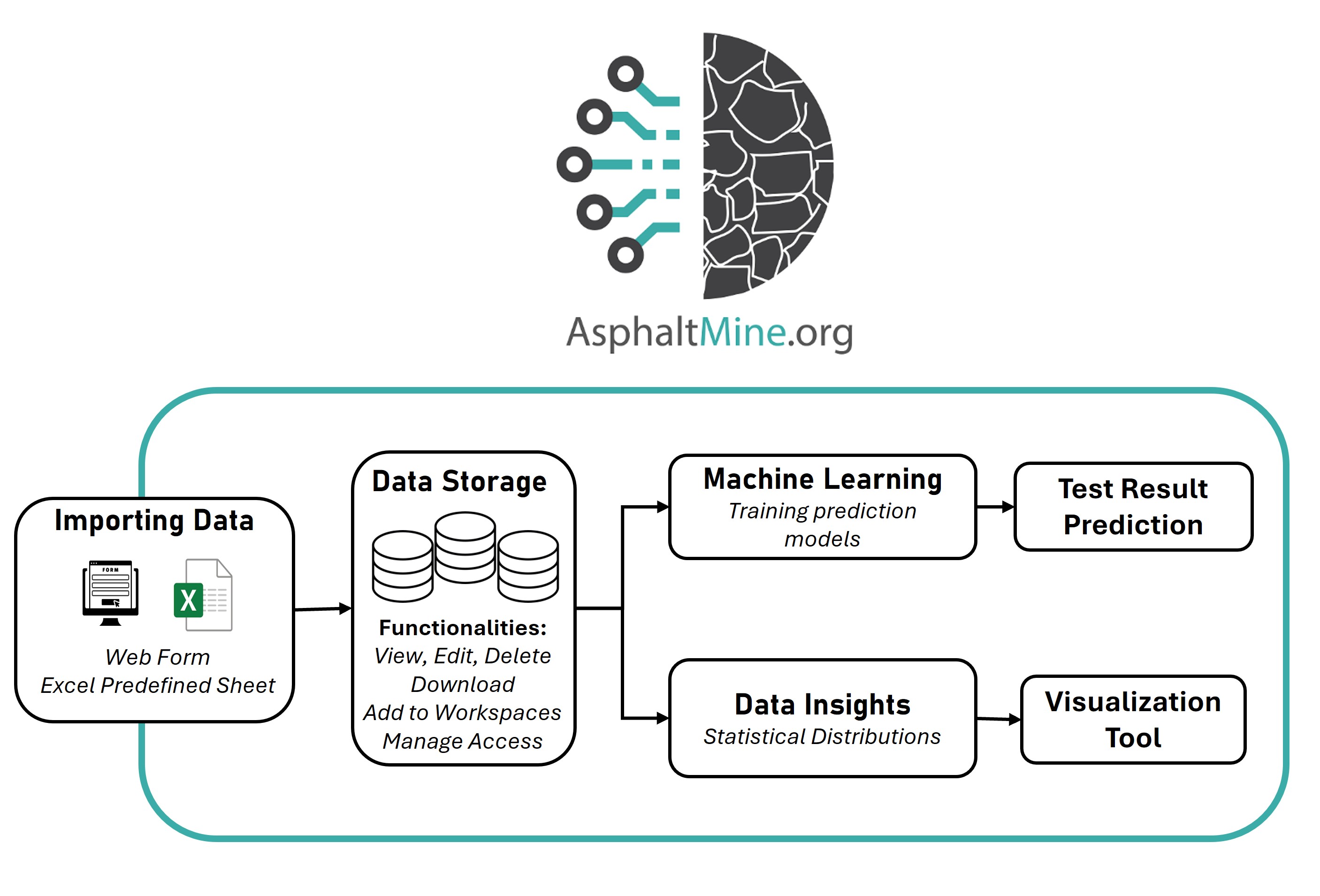
The lack of a unified, accessible platform for collecting and sharing standardized asphalt test result data has limited progress in data-driven pavement research. To address this challenge, AsphaltMine (https://asphaltmine.org) is being developed as a comprehensive web application platform dedicated to advancing data-driven pavement engineering. It allows users to collect asphalt test results in an organized online database, which can later be used to train machine learning models for predicting asphalt performance. The platform enables laboratories to contribute and retrieve unified laboratory test data for different tests, currently including the Rutting test, Marshall test, ITS, TSRST, and dynamic stiffness test. In addition to mixture test results, users are requested to input the corresponding component material test results and material proportions. The schema for these tests follows the European test standards, allowing standardized parameters to be entered. Users can upload data via an interactive web form or through a unified Excel sheet using a bulk import tool. The results are ultimately stored in a NoSQL database. In this paper, we discuss the potential benefits and challenges of creating such a database as well as describe the system architecture and data model of AsphaltMine, including the curation process and record storage, record structures, and user record management functionalities. We then demonstrate the data analysis and prediction features using the first test result prediction tool that was developed using the collected test results.
Downloads
Published
How to Cite
Issue
Section
License
Copyright (c) 2026 Mohammad Abbas, Martins Zaumanis

This work is licensed under a Creative Commons Attribution 4.0 International License.
Authors retain copyright of the articles published in RILEM Technical Letters and grant the journal the right of first publication with open access. The work is simultaneously licensed under Creative Commons Attribution 4.0 International License (CC BY 4.0) that allows others to share and adapt the work under the following terms: 1) a proper attribution is given in a form of bibliographic record with the DOI link directing to RILEM Technical Letters; 2) a link to the license is provided; 3) the changes (if any) are indicated.